
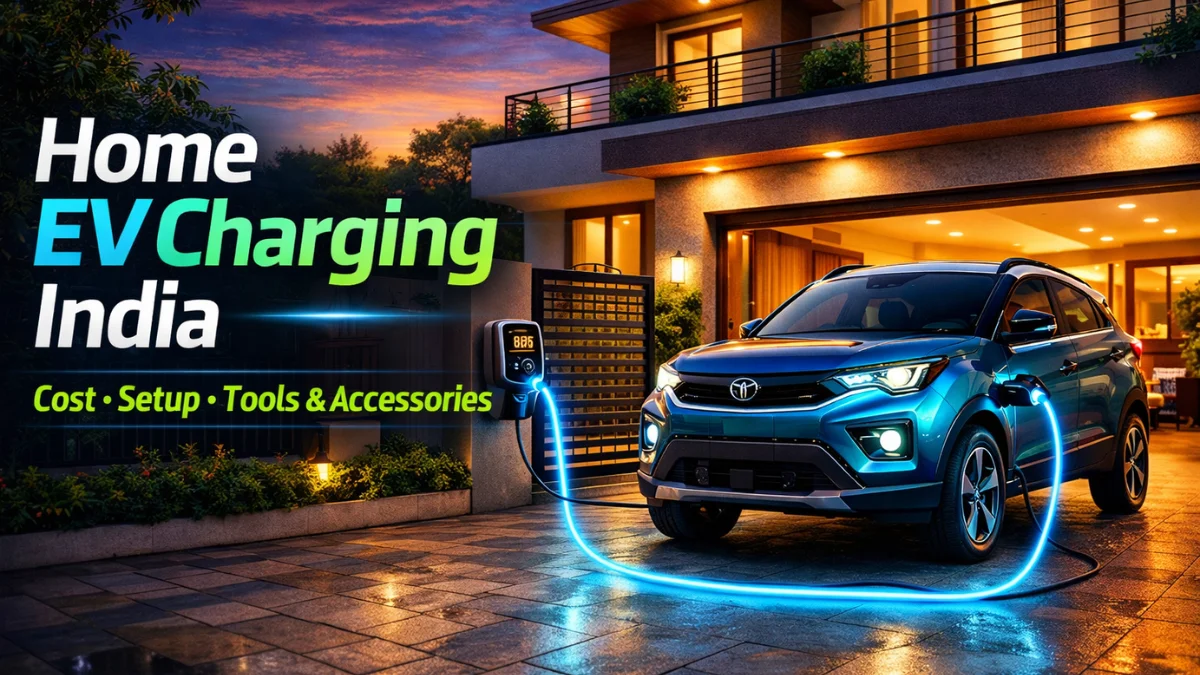
Electric vehicles are growing fast in India, and Home EV charging India is becoming the most convenient way to charge electric cars and scooters. With a proper home charging setup, EV owners can save money, charge overnight, and avoid long waiting times at public charging stations. In this complete guide, we explain the cost, installation process, tools, accessories, and electricity requirements for home EV charging in India.
How to set up EV home charging in India?
A proper EV home charging setup in India helps you charge your electric car or scooter safely, quickly, and conveniently at home. In this detailed guide, we will explain:
- EV home charging cost in India
- Required tools & accessories
- Charger types
- Installation process
- Safety tips
- Electricity requirements
This guide is written in simple language for Indian EV users.
Why EV Home Charging is Important in India
Public charging stations in India are increasing but still limited in many cities and towns. That’s why home charging is the best and most convenient option for EV owners.
Benefits of EV home charging
- Charge overnight at home
- Cheaper than public charging
- No waiting at charging stations
- Safe and convenient
- Increases battery life (slow charging is better)
More than 80% of EV owners in India charge at home, making it the primary charging method.
Types of EV Chargers for Home in India
Before installing, you must understand charger types available for EV home charging in India.
1. Slow Charger (Level 1)
- Uses normal 15A socket
- Charging time: 8–15 hours
- Best for scooters & small EVs
- Cheapest option
2. AC Fast Charger (Level 2)
- Uses 3.3kW to 7.4kW charger
- Charging time: 3–6 hours
- Best for electric cars
- Most recommended for home
3. DC Fast Charger (Not for home)
- Very expensive
- Used in public stations
- Not practical for houses
Recommended for Indian homes:
AC fast charger (7.4kW) is best for home charging setup.
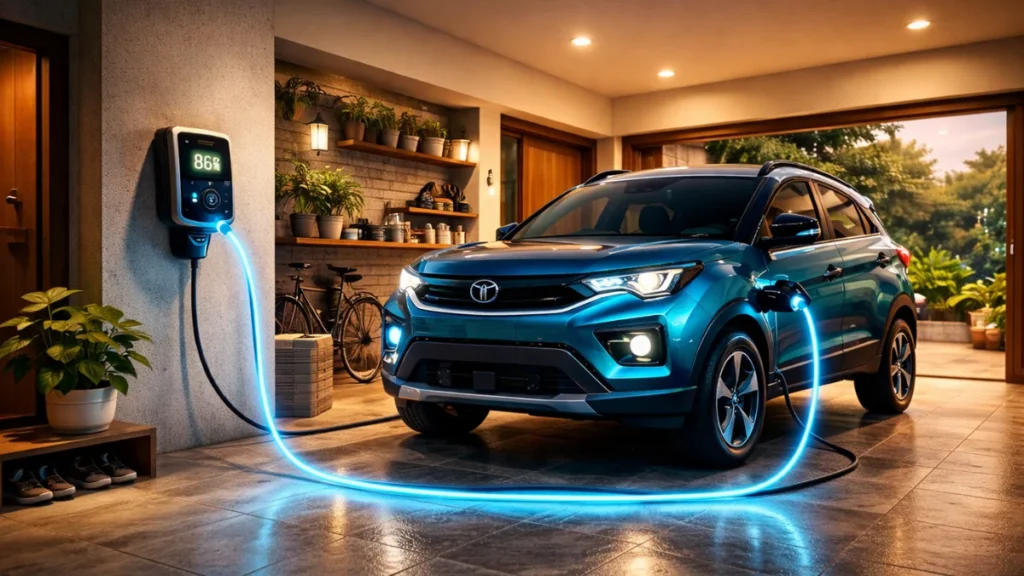
EV Home Charging Setup Cost in India (2026)
Here’s a complete cost breakdown for EV home charging setup in India:
| Item | Estimated Cost (₹) |
|---|---|
| EV home charger (company provided) | Free – ₹50,000 |
| Installation charges | ₹2,000 – ₹10,000 |
| Wiring & MCB | ₹3,000 – ₹8,000 |
| Earthing setup | ₹2,000 – ₹5,000 |
| Weatherproof socket box | ₹1,500 – ₹3,000 |
| Total setup cost | ₹10,000 – ₹70,000 |
Important:
Many companies like Tata, MG, Mahindra provide free home charger + installation with EV purchase.
Electricity Requirements for EV Home Charging
Before installing EV charger at home, check electricity connection.
Minimum requirements:
- Dedicated parking space
- Power load: 3kW to 7kW
- Proper earthing
- 15A or 32A socket
- Separate MCB
For electric cars:
Upgrade to 7kW meter load for faster charging.
Contact local electricity board:
- UPPCL (UP)
- BSES (Delhi)
- State electricity board
They can upgrade your meter load if required.
Tools Required for EV Home Charging Setup
A proper EV home charging setup in India requires some basic tools.
Essential tools list
| Tool Name | Purpose |
|---|---|
| Multimeter | Check voltage & wiring |
| Screwdriver set | Installation work |
| Drill machine | Mount charger |
| Wire cutter | Cable setup |
| Insulated gloves | Safety |
| Socket tester | Check earthing |
| Voltage stabilizer (optional) | Protect charger |
These tools ensure safe installation and maintenance.
Must-Have EV Charging Accessories for Home
Accessories make charging safer and more convenient.
1. Charging Cable Organizer
Keeps cable safe and neat
Prevents damage
2. Charging Gun Holder
Wall mount holder for charging gun
Avoids dust and damage
3. Weatherproof Socket Box
Protects from rain and dust
Important for outdoor parking
4. Extension Cable (Heavy duty)
Useful if parking far from socket
Use only high-quality cable
5. Smart Plug with WiFi
Monitor charging usage
Control charging remotely
6. Surge Protector
Protects from voltage fluctuations
Very important in India
EV Home Charging Installation Process (Step-by-Step)
Here is how EV home charging setup is installed in India:
Step 1: Check parking space
Ensure charger location near car parking.
Step 2: Check power load
Electrician checks meter load capacity.
Step 3: Install dedicated MCB
Separate MCB for EV charger for safety.
Step 4: Proper earthing
Earthing is very important to avoid shocks.
Step 5: Mount charger
Charger installed on wall.
Step 6: Testing
Check voltage and charging speed.
Installation usually takes 2–4 hours.
Monthly Electricity Cost of EV Charging at Home
EV charging at home is much cheaper than petrol.
Example calculation (India)
| Vehicle | Battery | Monthly Cost |
|---|---|---|
| Electric scooter | 3kWh | ₹200–₹300 |
| Tata Nexon EV | 30kWh | ₹1,000–₹1,500 |
| MG ZS EV | 50kWh | ₹1,500–₹2,000 |
Average electricity rate: ₹7–₹9 per unit
Charging at home is 70–80% cheaper than petrol.
Safety Tips for EV Home Charging in India
Safety is very important in EV charging.
Follow these tips:
- Always use branded charger
- Install proper earthing
- Use dedicated MCB
- Avoid cheap extension cables
- Keep charger away from water
- Check wiring regularly
- Do not overload socket
Never use local or duplicate chargers.
Best Location to Install EV Charger at Home
Choose location carefully.
Ideal location:
- Covered parking
- Near electricity meter
- Away from rain
- Wall mounted position
- Easy cable reach
For apartments:
- Install in dedicated parking
- Take society permission
- Use sub-meter if needed
EV Home Charging Setup for Apartments
Apartment EV owners can also install chargers.
Steps:
- Take permission from society
- Install charger near parking
- Use separate meter
- Follow DISCOM rules
Many societies now support EV charging.
Government Rules for Home EV Charging in India
Indian government supports EV charging at home.
Key rules:
- No license required for home charging
- Allowed in private parking
- DISCOM must provide connection
- Subsidies in some states
States like Delhi, Maharashtra offer support.
Advantages of EV Home Charging Setup
| Benefit | Description |
|---|---|
| Convenience | Charge anytime |
| Cost saving | Cheaper than petrol |
| Battery health | Slow charging is safe |
| Time saving | No waiting |
| Smart charging | Night charging option |
Home charging is best for daily use.
Common Mistakes to Avoid
Avoid these mistakes:
- Using cheap local charger
- No earthing
- Overloading socket
- Wrong cable size
- Charging in rain without cover
- Ignoring voltage fluctuations
Always hire professional electrician.
Future of EV Home Charging in India
EV charging technology is improving.
Upcoming trends:
- Smart app-based chargers
- Solar EV charging
- Wireless charging
- Faster home chargers
- Government subsidies
By 2030, most homes will have EV chargers.
Conclusion
Setting up an EV home charging setup in India is simple, affordable, and highly beneficial. With proper tools, accessories, and safety measures, you can charge your electric vehicle conveniently at home.
Whether you own an electric scooter or car, home charging saves money, time, and effort. With EV adoption increasing in India, installing a home charging setup is a smart long-term investment.
If you are planning to buy an electric vehicle, make sure to set up a proper home charging system for the best experience.
FAQs
1. What is the cost of EV home charging setup in India?
The cost ranges from ₹10,000 to ₹70,000 depending on charger type, wiring, and installation. Many EV companies provide free home charger installation.
2. Can I charge my electric car at home in India?
Yes, you can easily charge your electric car at home using a home charger or 15A socket. Most EV owners in India charge at home daily.
3. How much electricity does EV charging cost per month?
Electric scooter costs around ₹200–₹300/month and electric car costs around ₹1,000–₹2,000/month depending on usage.
4. Do I need special permission for EV home charging?
No special permission required for independent houses. Apartment owners may need society permission for installation.
5. Which charger is best for EV home charging in India?
AC fast charger (7.4kW) is best for electric cars, while 15A slow charger is enough for electric scooters.