
Toyota Sets Timeline for Urban Cruiser EV Arrival in India
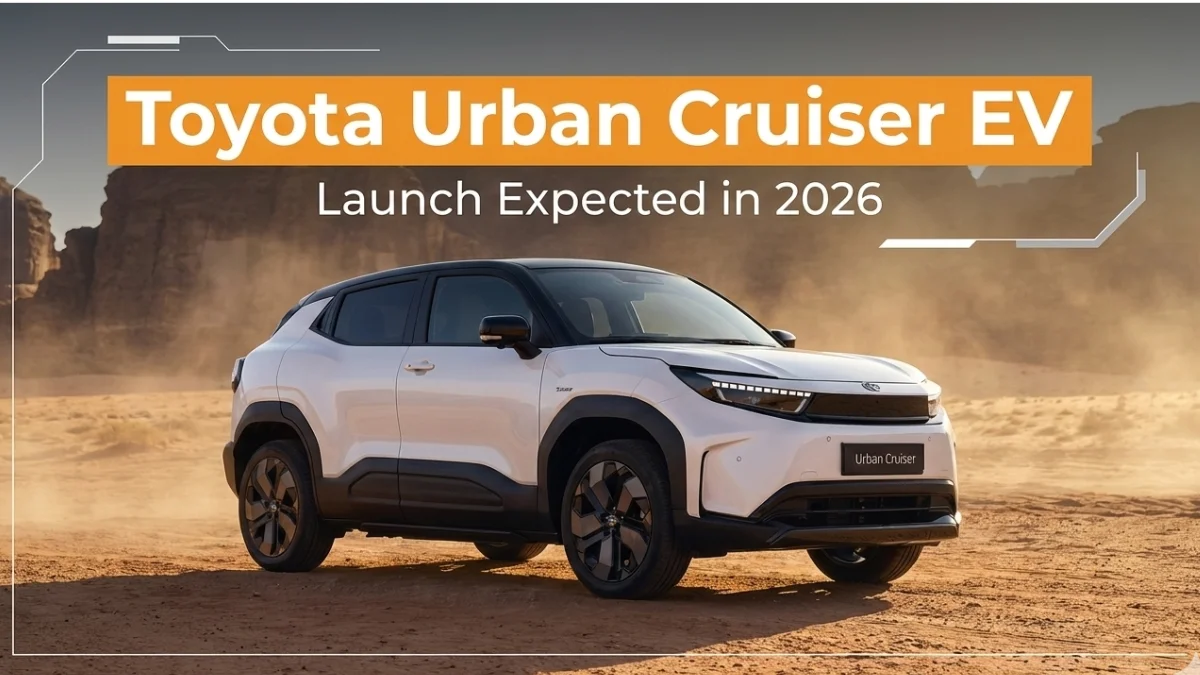
Toyota is preparing to strengthen its electric vehicle presence in India with the upcoming Toyota Urban Cruiser EV, which is expected to make its global debut in January 2026, followed by a market launch around March 2026. Positioned in the fast-growing mid-size electric SUV segment, the model is expected to be Toyota’s mass-market EV offering for India.
The electric SUV will be based on the same platform as the Maruti Suzuki e-Vitara, developed under the long-standing Toyota–Suzuki partnership. While both models will share core architecture and powertrain components, Toyota is expected to give the Urban Cruiser EV its own styling identity and feature positioning.
Launch Timeline and Manufacturing Strategy
As per industry sources, the Toyota Urban Cruiser EV will be unveiled shortly after the debut of the Maruti e-Vitara in January 2026. Sales are expected to begin between February and March 2026, placing Toyota right in the middle of India’s rapidly expanding electric SUV space.
The vehicle is likely to be produced at Suzuki’s Gujarat manufacturing facility, allowing Toyota to benefit from localisation and cost efficiencies—an important factor in keeping EV prices competitive in India.
Battery Options and Driving Range
Toyota is expected to offer the Urban Cruiser EV with two battery pack options, catering to both city-focused users and long-distance drivers.
- 49kWh battery:
Designed primarily for urban use, this version is expected to deliver a real-world range between 344km and 426km, depending on drivetrain configuration. - 61kWh battery:
The larger battery pack is claimed to offer a range of up to 543km on a single charge, making it one of the longest-range electric SUVs in its segment.
International versions have also shown support for DC fast charging, with 10–80% charging possible in under an hour. Similar charging capabilities are expected for the India-spec model.
Design and Dimensions
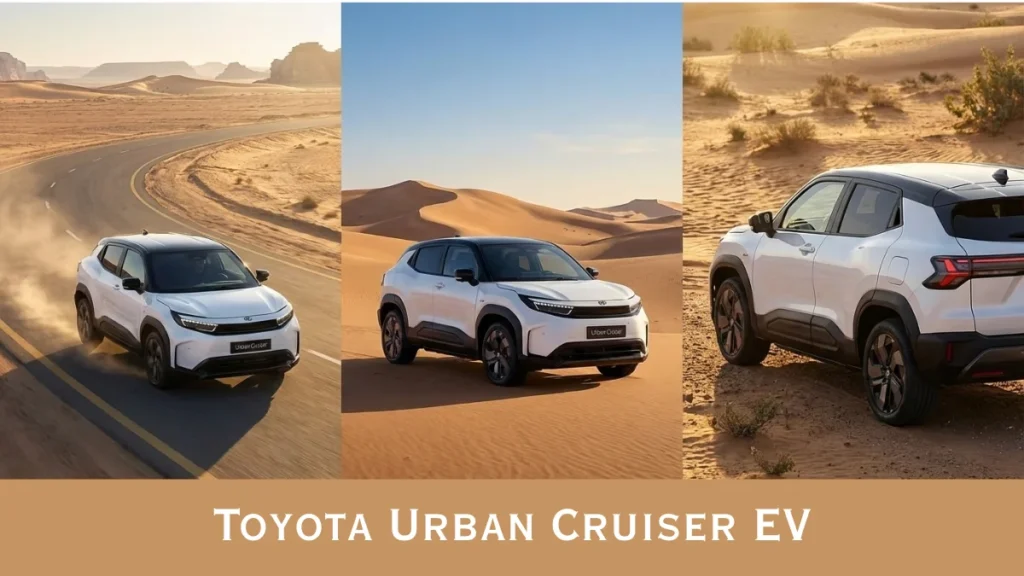
While closely related to the e-Vitara, the Toyota Urban Cruiser EV will feature distinct visual updates to align with Toyota’s global EV design language.
Key expected highlights include:
- Smoother front fascia with slimmer LED headlamps
- Toyota-specific grille design and branding
- Sporty bumpers and larger 19-inch alloy wheels
In terms of size, the electric SUV is expected to measure around:
- Length: ~4,285mm
- Width: ~1,800mm
- Height: ~1,640mm
- Wheelbase: 2,700mm
These dimensions place it firmly in the mid-size SUV category, offering generous cabin space and good road presence.
Interior, Technology and Features
Inside, the Toyota Urban Cruiser EV is expected to offer a modern, tech-focused cabin aimed at premium family buyers.
Expected features include:
- 10.25-inch touchscreen infotainment system
- Wireless Apple CarPlay and Android Auto
- 10.1-inch digital instrument cluster
- 360-degree surround-view camera
- Panoramic interior layout with ample legroom
Toyota is also expected to equip the SUV with Level 2 ADAS, offering features such as adaptive cruise control, lane keep assist, blind-spot monitoring and emergency braking assistance.
Safety Package
Safety is expected to be a key focus area for the Urban Cruiser EV. Along with ADAS, the SUV is likely to come with:
- Multiple airbags
- Electronic stability control
- Parking sensors
- Advanced driver assistance features tuned for Indian road conditions
Expected Price and Competition
The Toyota Urban Cruiser EV is expected to be priced between ₹18 lakh and ₹24 lakh (ex-showroom), depending on battery size and variant.
In the Indian market, it will compete with electric SUVs such as:
- Hyundai Creta Electric
- Mahindra BE 6
- MG ZS EV
- Tata Curvv EV
- Upcoming Tata Sierra EV
India Launch Outlook
Although Toyota has already introduced the Urban Cruiser EV in European markets, the Indian version is expected to be tailored for local conditions. With rising EV adoption, improving charging infrastructure and government incentives, the timing appears right for Toyota to enter this segment.
If launched with competitive pricing and strong localisation, it could become a key volume driver in Toyota’s electric portfolio in India.